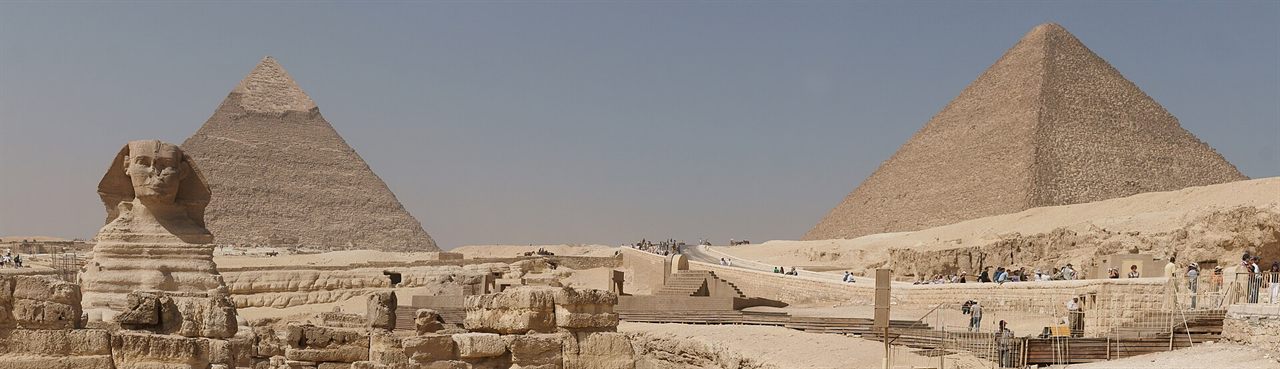
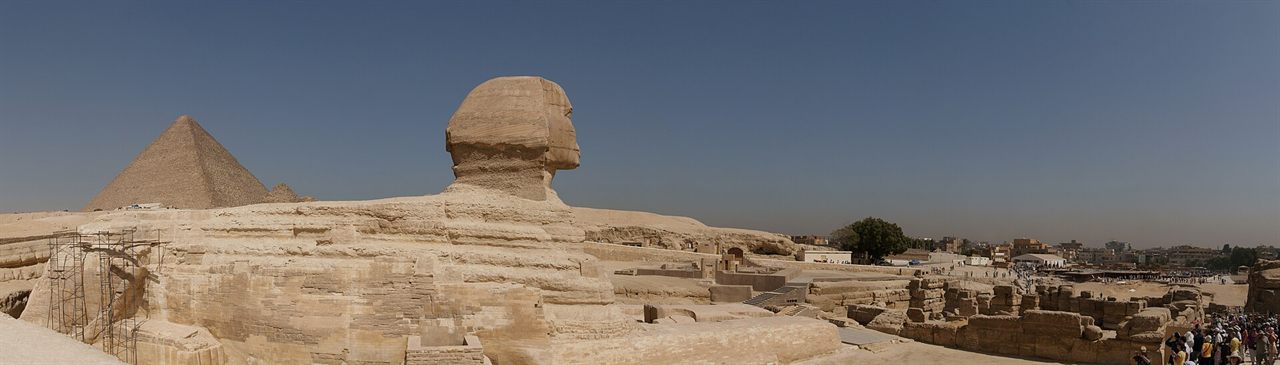
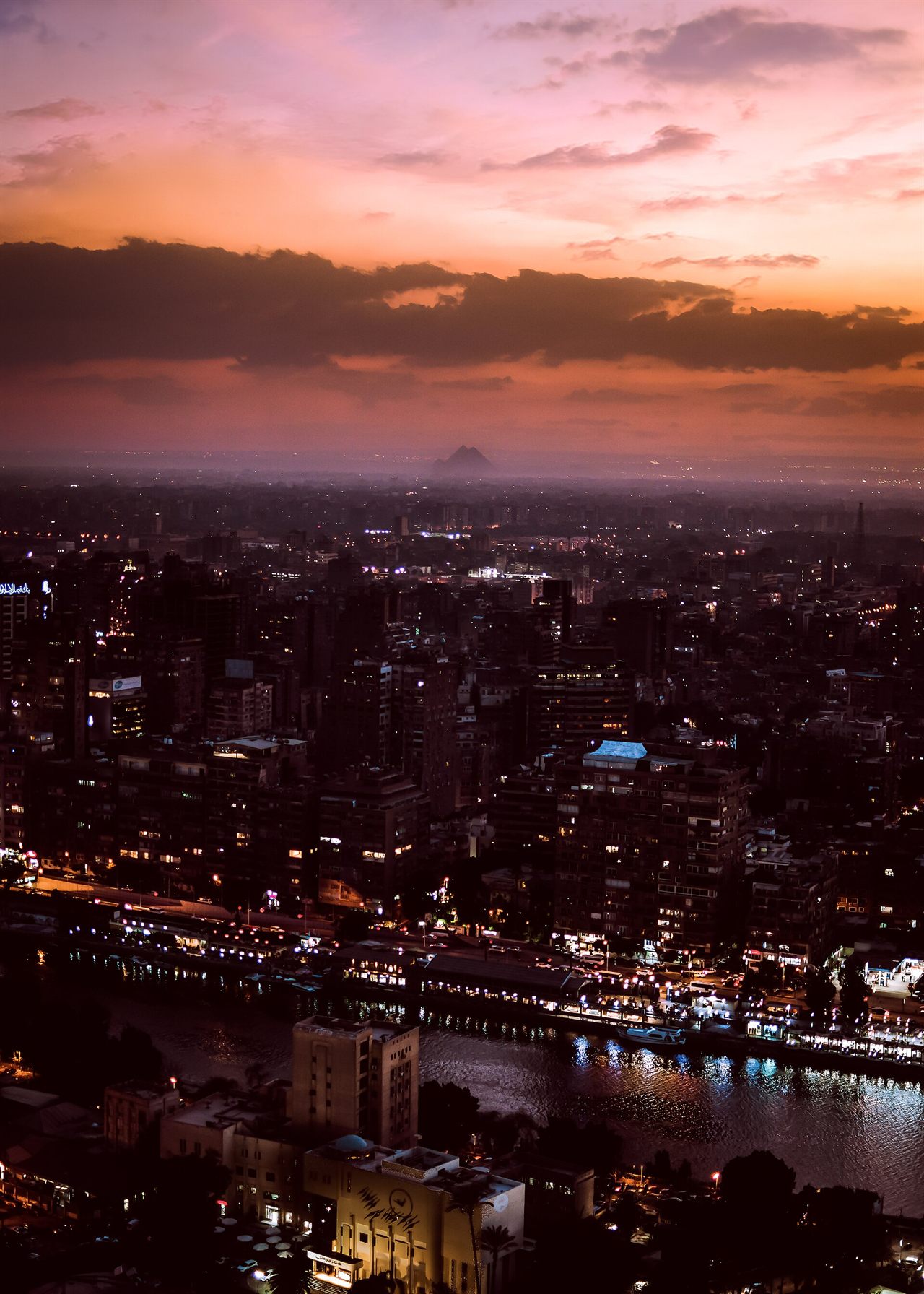
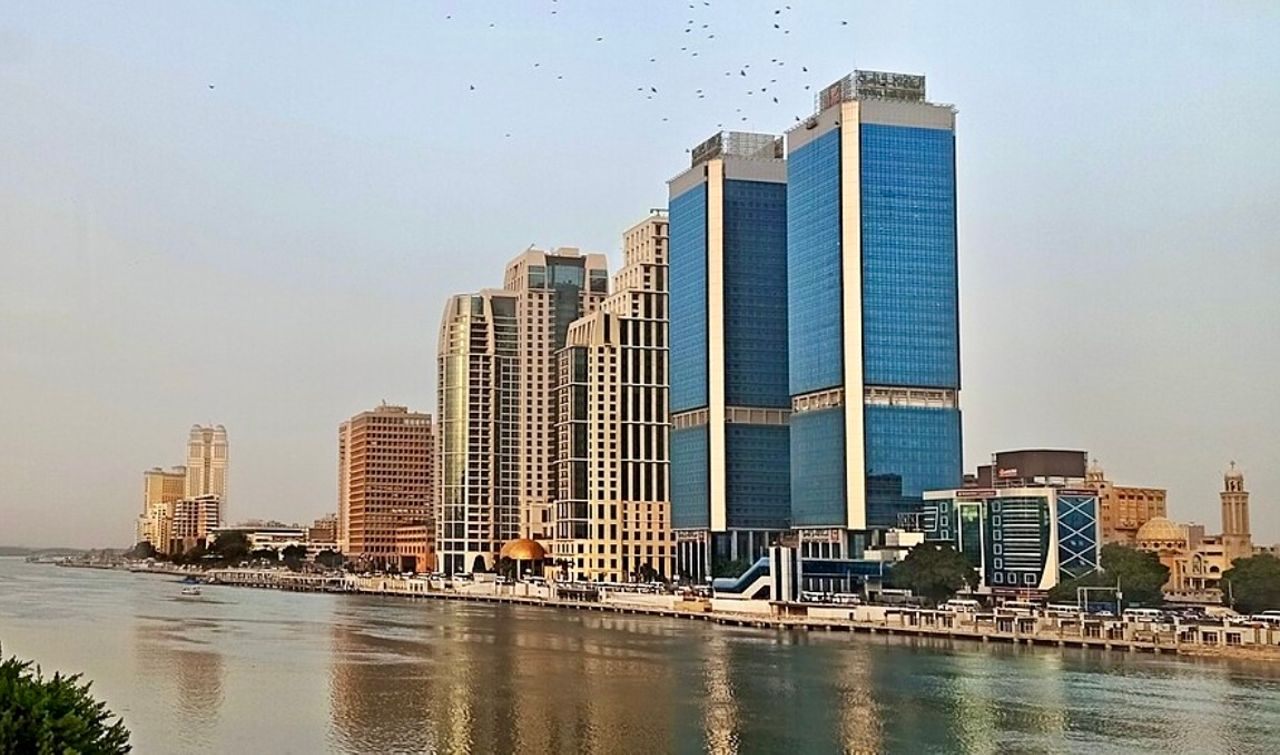
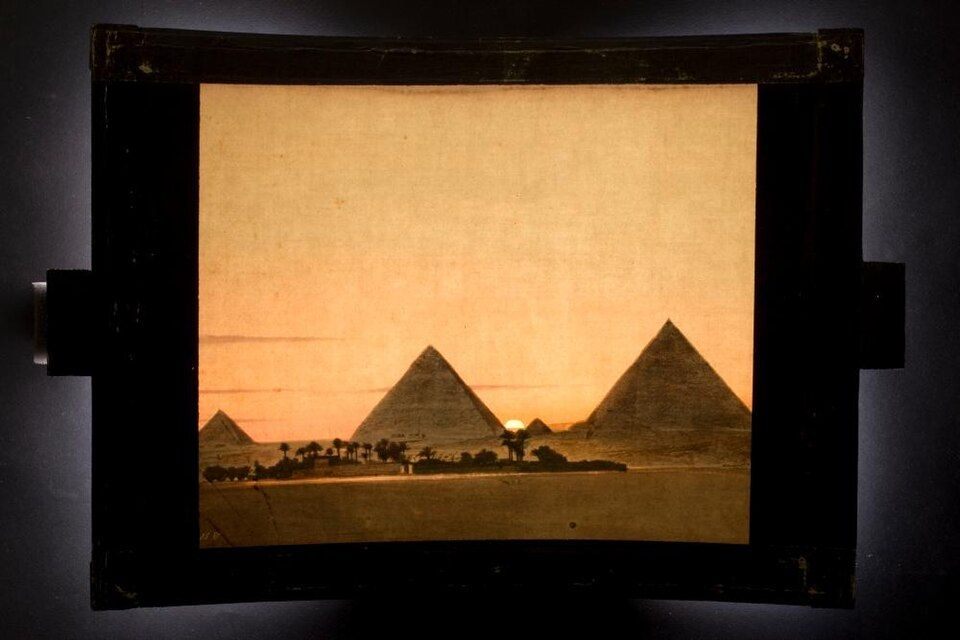
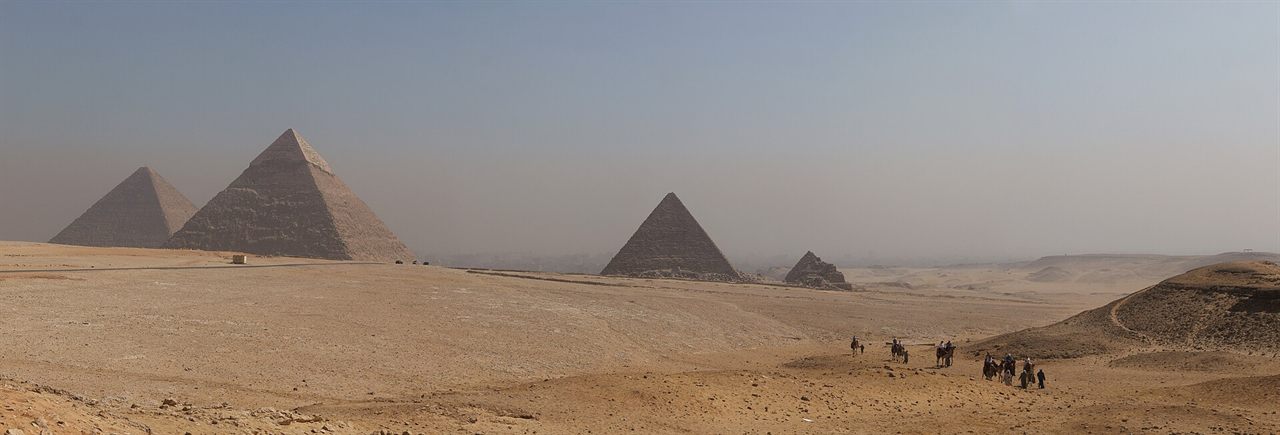
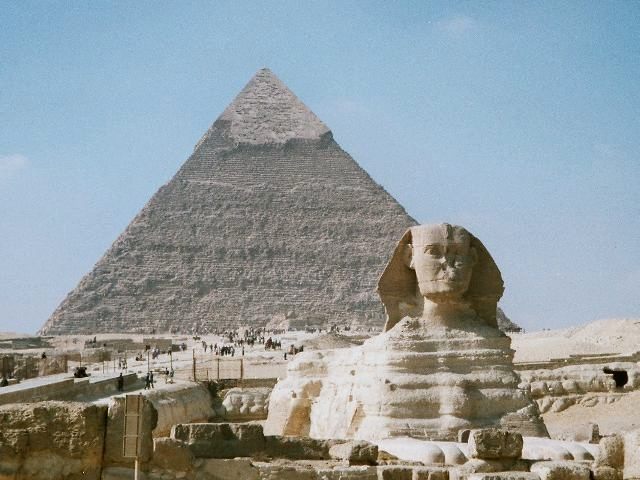
On the western edge of Cairo, the Giza plateau holds the Great Pyramid of Khufu, the pyramids of Khafre and Menkaure, and the Sphinx. Built more than 4,500 years ago, these monuments were not isolated wonders: they formed a royal cemetery linked to the Nile by causeways and temples, and they still shape the horizon of a modern city of more than twenty million people.
على الحافة الغربية للقاهرة تضم هضبة الجيزة الهرم الأكبر للخوفو وأهرامي خفرع ومنكاو وأبو الهول. بُنيت هذه الآثار قبل أكثر من 4500 عام، ولم تكن عجائب منعزلة، بل ممتلكات جنائزية ملكية ربطها طرق صاعدة ومعابد بنهر النيل، وما زالت حتى اليوم تشكّل أفق مدينة حديثة يزيد عدد سكانها على عشرين مليوناً.
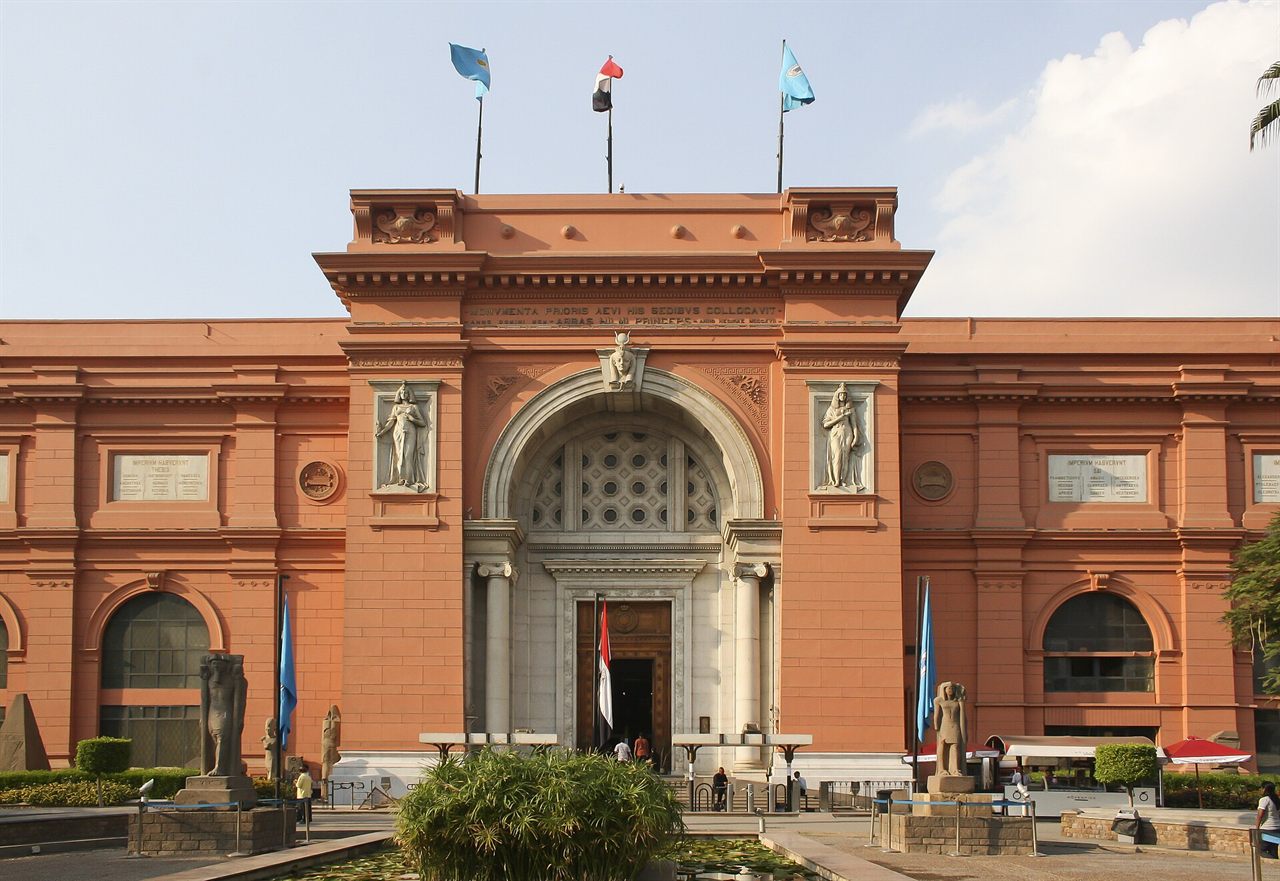
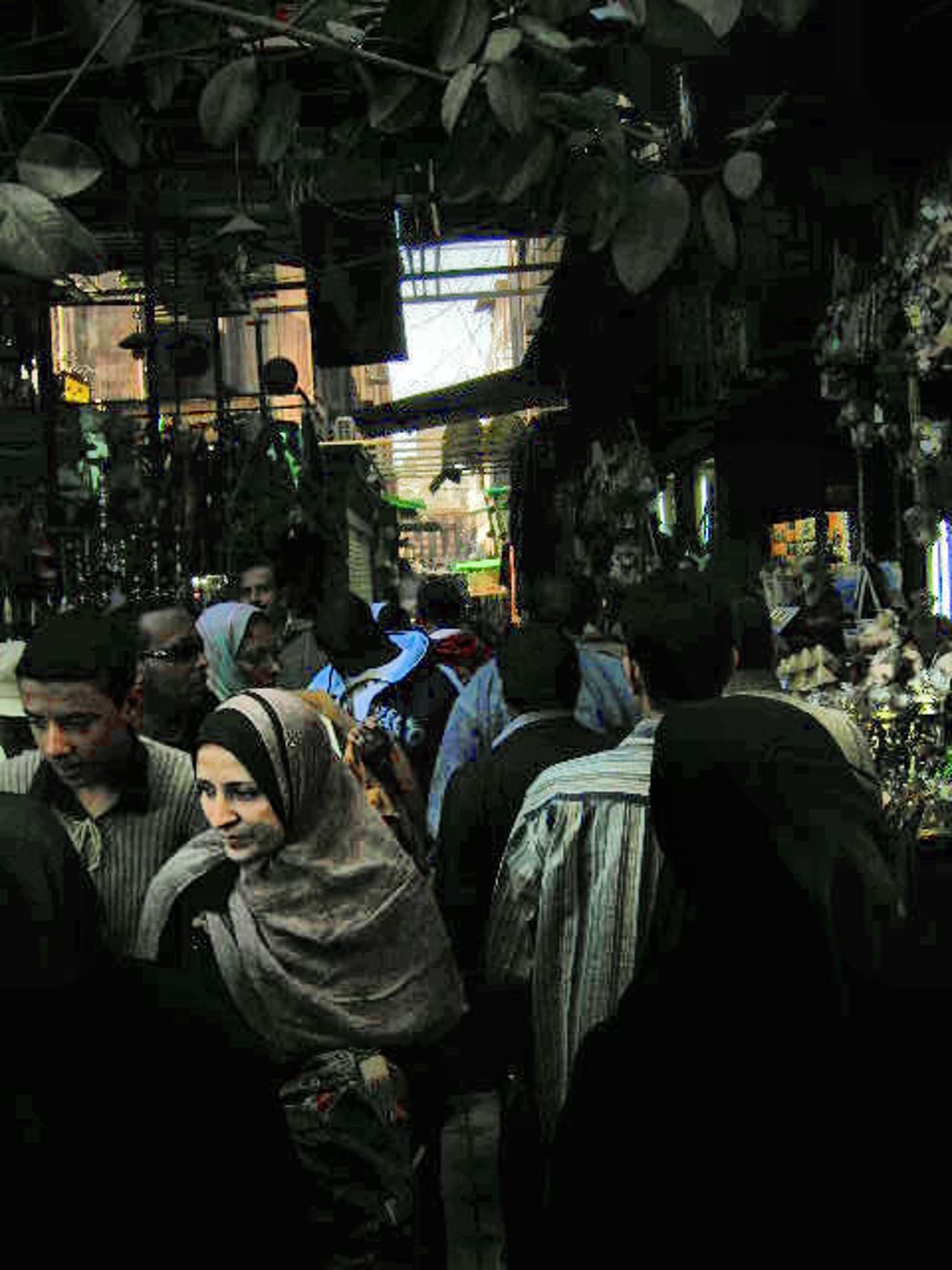
Cairo itself is a palimpsest. Pharaonic remains sit near Roman ruins, early churches, medieval mosques and nineteenth-century boulevards. The Egyptian Museum in Tahrir Square holds an extraordinary collection of antiquities, while the lanes around Khan el-Khalili keep alive the trades, scents and rhythms of the old city. Giza and Cairo together tell the story of Egypt from its oldest kings to its present-day streets.
القاهرة مدينة طبقات؛ فآثار الفراعنة تجاور الآثار الرومانية والكنائس المبكرة والمساجد القديمة والشوارع التي شُيّدت في القرن التاسع عشر. يضم المتحف المصري في ميدان التحرير مجموعة استثنائية من التحف، بينما تحتفظ أزقة خان الخليلي بحرفها وروائحها وإيقاعها القديم. تمثل الجيزة والقاهرة معاً حكاية مصر من أقدم ملوكها إلى شوارعها اليوم.